

Table of Contents
- Introduction
- What Is a Self-Drive Desert Safari?
- Why Tourists Consider Self-Drive Safari
- Is Self-Drive Desert Safari Worth It?
- Safety Risks You Should Know
- Legal Rules & Desert Access in Dubai and Sharjah
- Insurance & Vehicle Damage Reality
- Comparison: Self-Drive vs Guided Desert Safari
- Who Should Consider a Self-Drive Desert Safari
- Who Should Avoid Self-Driving Desert Safari
- Better Alternative: Guided Desert Safari
- Conclusion
- FAQs
Is Self-Drive Desert Safari Worth It in Dubai & Sharjah? – Honest Safety Guide (2026)
Many visitors come to Dubai or Sharjah with one simple idea in mind:
“Why not rent a car and drive into the desert myself?”
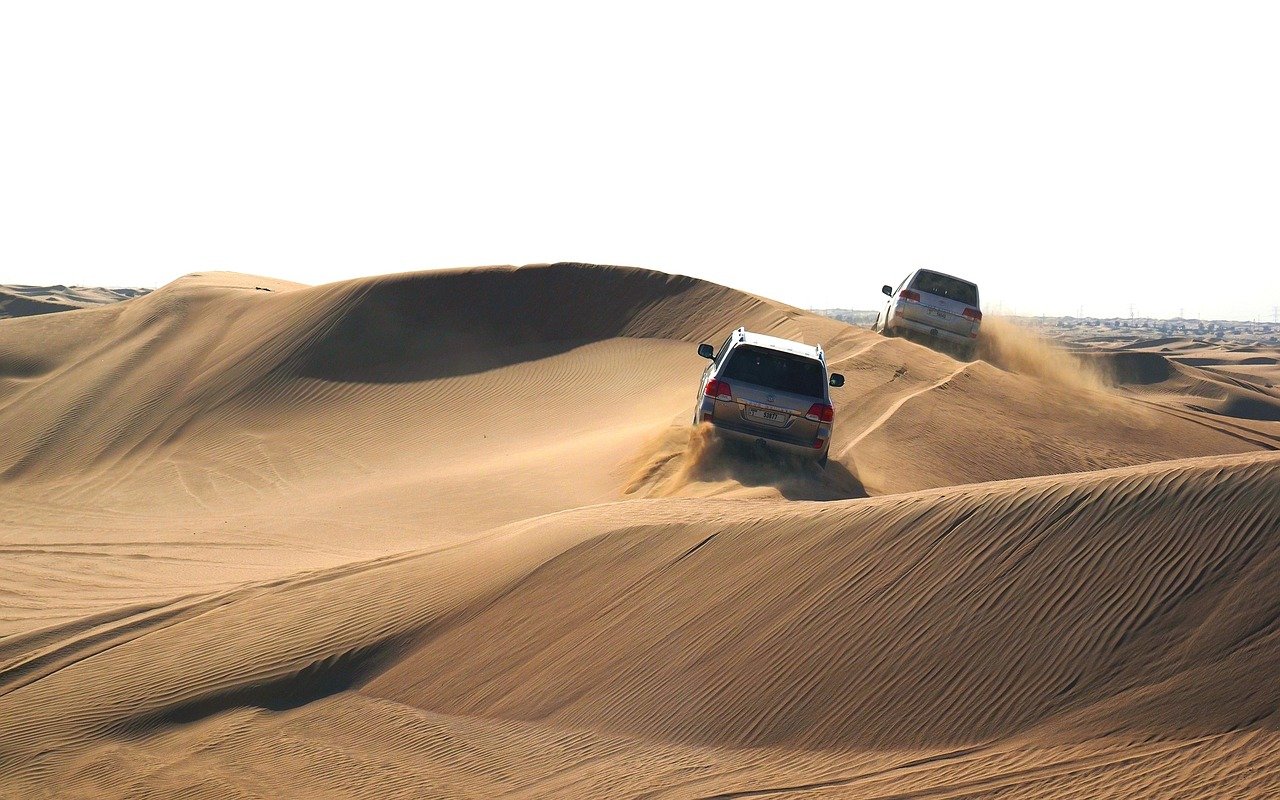
On the surface, a self-drive desert safari sounds perfect. No schedules, no tour groups, just you, the sand, and the open desert. It feels like a fun and free way to explore.
But once people start searching online or asking locals, a common doubt appears: Is a self-drive desert safari actually worth it here?
The truth is, the desert in Dubai and Sharjah is not as open or easy as many tourists expect. There are rules, restricted areas, safety risks, and real challenges that most visitors don’t think about at first.
This guide breaks everything down clearly and honestly. It explains what a self-drive desert safari really means today, what problems tourists often face, and why safety should come before adventure. No hype, just the reality you should know before making a decision.
What Is a Self-Drive Desert Safari?
A self-drive desert safari means you take your own car or a rented 4×4 and explore the desert on your own, without a tour guide or support vehicle. You plan your route, find a legal entry point, park your car, and drive on the sand yourself. There’s no pickup, no group, and no backup; everything is your responsibility.
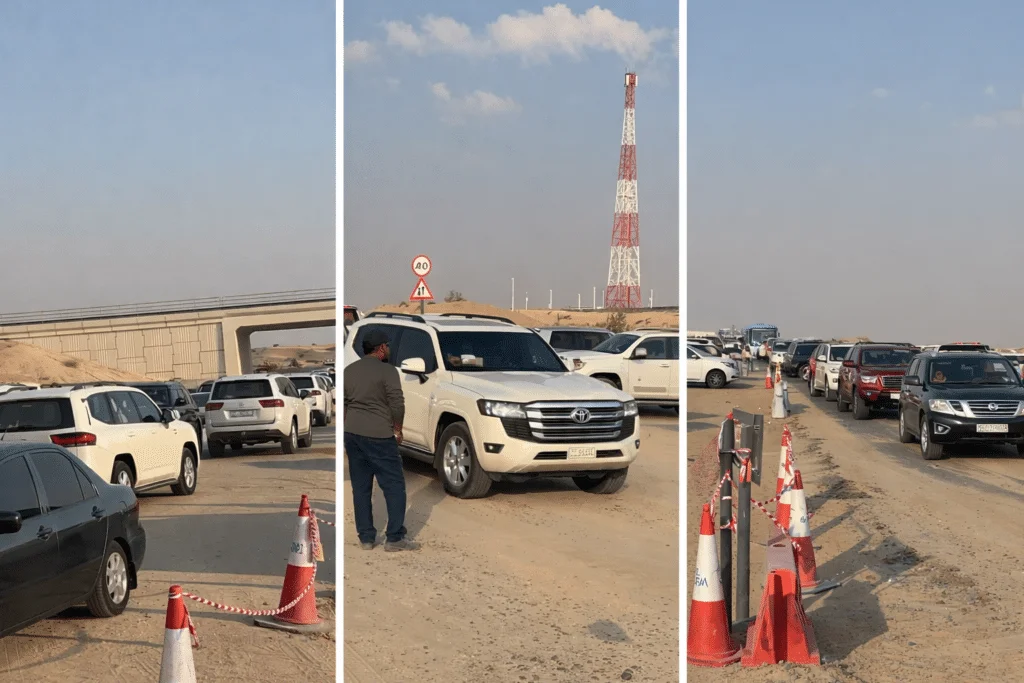
In Dubai, people usually start in areas like Al Awir or the roads leading to desert camps. In Sharjah, access is stricter, with fewer entry points and tighter rules. Some areas are close to the city, but most of the desert is controlled or restricted.
If you’ve never been to the desert before, it’s important to know:
- Desert driving is very different from city roads.
- There are no clear lanes or road signs.
- Sand conditions can change quickly and unexpectedly.
- Navigation, parking, and vehicle control are all up to you.
Because of these challenges, self-drive desert safaris are not as simple as they may seem. Experience, preparation, and proper equipment are key to staying safe.
Why Tourists Consider Self-Drive Safari
Many tourists think a self-drive desert safari is a good idea at first.
One big reason is freedom. People like the idea of going at their own time. No fixed schedule. No waiting for other guests. They can stop wherever they want and leave whenever they want.
Another reason is cost. Some visitors believe driving their own car or renting a 4×4 will be cheaper than booking a tour. On paper, it looks like a simple way to save money.
Adventure also plays a role. Driving on sand feels exciting, especially for people who enjoy road trips or off-road videos they see online. It looks easy and fun.
Some tourists also want privacy. They prefer being alone with family or friends instead of sharing a vehicle with strangers.
These reasons sound good, especially before seeing the desert in real life. That’s why many visitors seriously consider a self-drive safari before learning about the challenges.
Is Self-Drive Desert Safari Worth It?
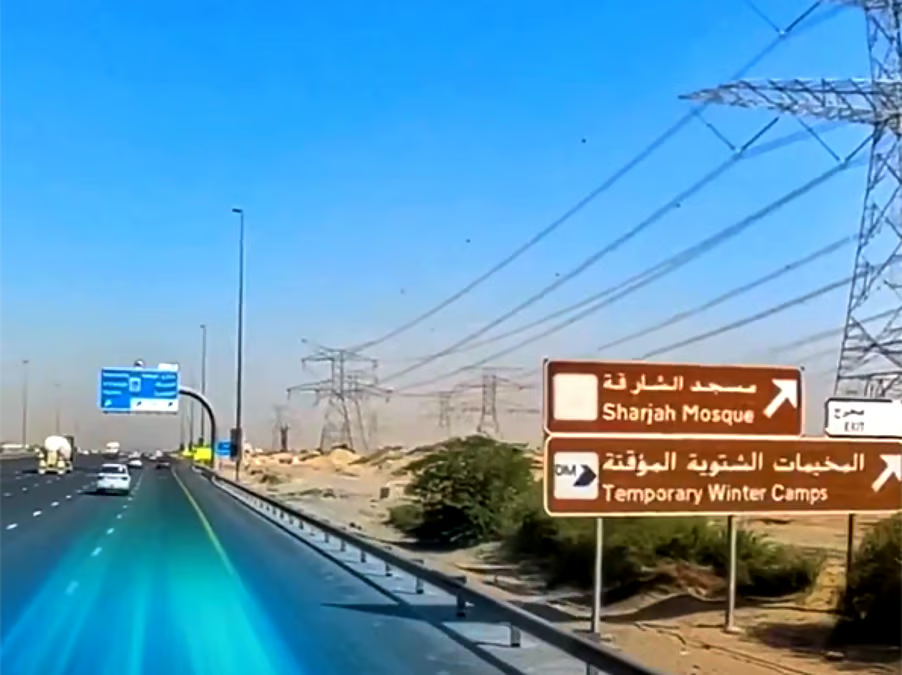
It may suit very experienced off-road drivers who know the desert well and understand local rules. For everyone else, it comes with safety risks, access problems, and stress.
Restricted entry points, parking issues, and the risk of getting stuck make it difficult. Rental car limits and insurance issues add more risk.
|
Factor |
Self-Drive Desert Safari |
Guided 4×4 Desert Safari |
|
Experience needed |
Very high |
None |
|
Safety |
Risky without skills and support |
High (trained driver + backup) |
|
Desert access |
Restricted and confusing |
Legal and permitted routes |
|
Parking |
Difficult or not available |
Not needed |
|
Risk of getting stuck |
High |
Very low |
|
Insurance coverage |
Usually not covered |
Covered by the operator |
|
Best for |
Expert off-road drivers only |
Tourists, families, first-timers |
Safety Risks You Must Know

Driving in the desert is very different from driving on normal roads. Many tourists don’t realize this until they face problems.
- Getting stuck in soft sand: The sand can look solid but may suddenly give way. Without proper tire pressure and recovery tools, your car can get stuck completely.
- Car rollovers: Sharp turns or climbing dunes can incorrectly cause accidents. Dunes often have sudden drops that are hard to judge without experience.
- No immediate rescue support: When driving alone, there’s no guide or backup vehicle. If something goes wrong, help can take a long time to arrive.
- Heat and equipment issues: Desert heat can overheat cars and electronics, and long waits under the sun can be dangerous.
These risks don’t make the desert unsafe, but they clearly show why experience, proper preparation, and support are very important for a self-drive desert safari.
Key points to remember:
- Soft sand can trap even experienced drivers.
- Rollover risk is higher without training.
- Rescue and backup are not available for self-driving.
- Extreme heat can affect both people and vehicles.
These risks don’t mean the desert is unsafe, but they do show why experience and proper support matter a lot.
Legal Rules & Desert Access in Dubai and Sharjah
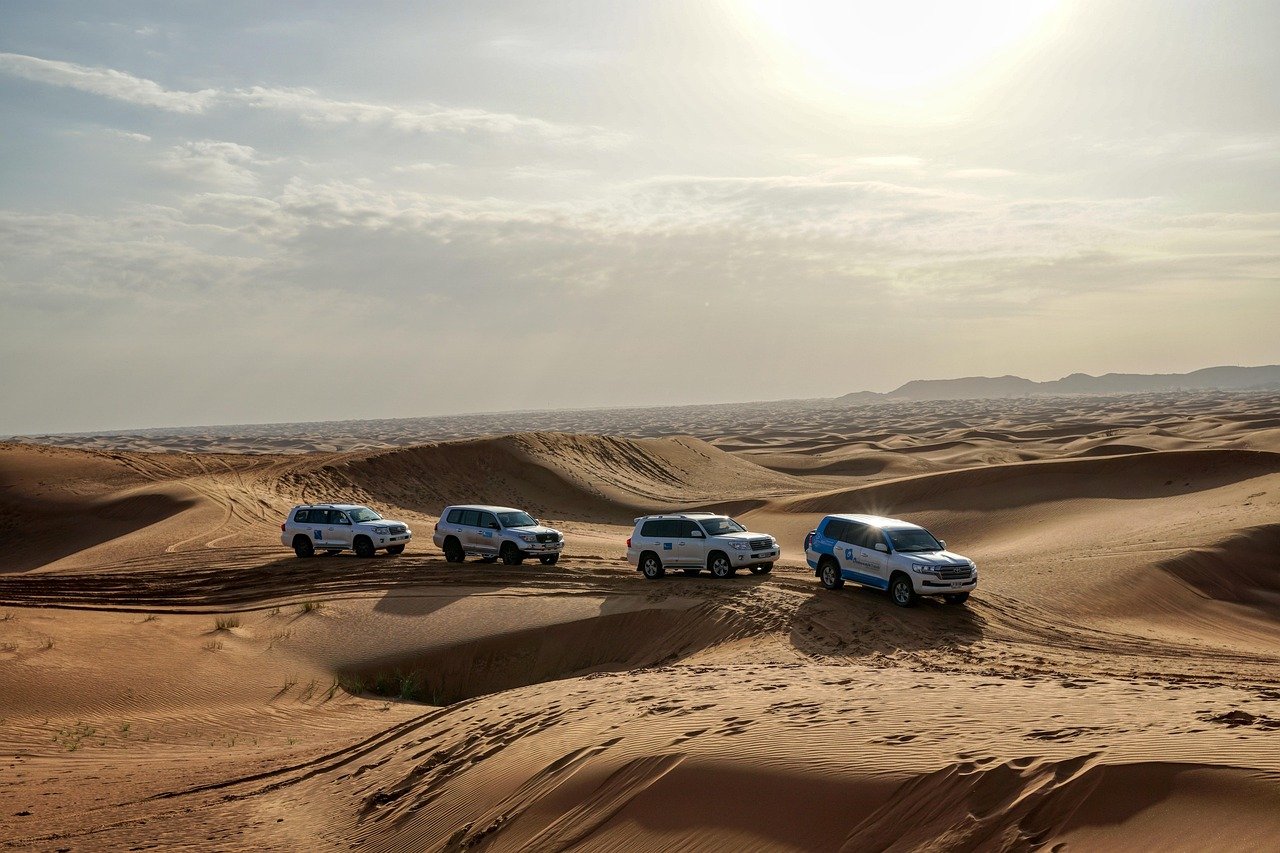
Driving in the deserts of Dubai and Sharjah is not as simple as it seems. Most areas are controlled, and only licensed operators or certain roads are legally accessible. Understanding the rules is crucial to staying safe and avoiding fines.
Important points to know:
- Restricted areas: Most desert zones are off-limits to self-drivers.
- Checkpoints and patrols: Authorities monitor entry points to prevent illegal driving.
- Al Awir Road: The new 8 km road only allows access to registered tourist camps, not free desert driving.
- Sharjah desert: Access is stricter, with fewer entry points and controlled areas.
- Parking rules: Legal parking is limited; parking on sand can lead to stuck vehicles or fines.
- Penalties: Driving in restricted areas can result in fines, towing, or vehicle confiscation.
- Guided tours: They get benefits from licensed operators who have permits, know safe routes, and handle all legal requirements.
Insurance & Vehicle Damage Reality
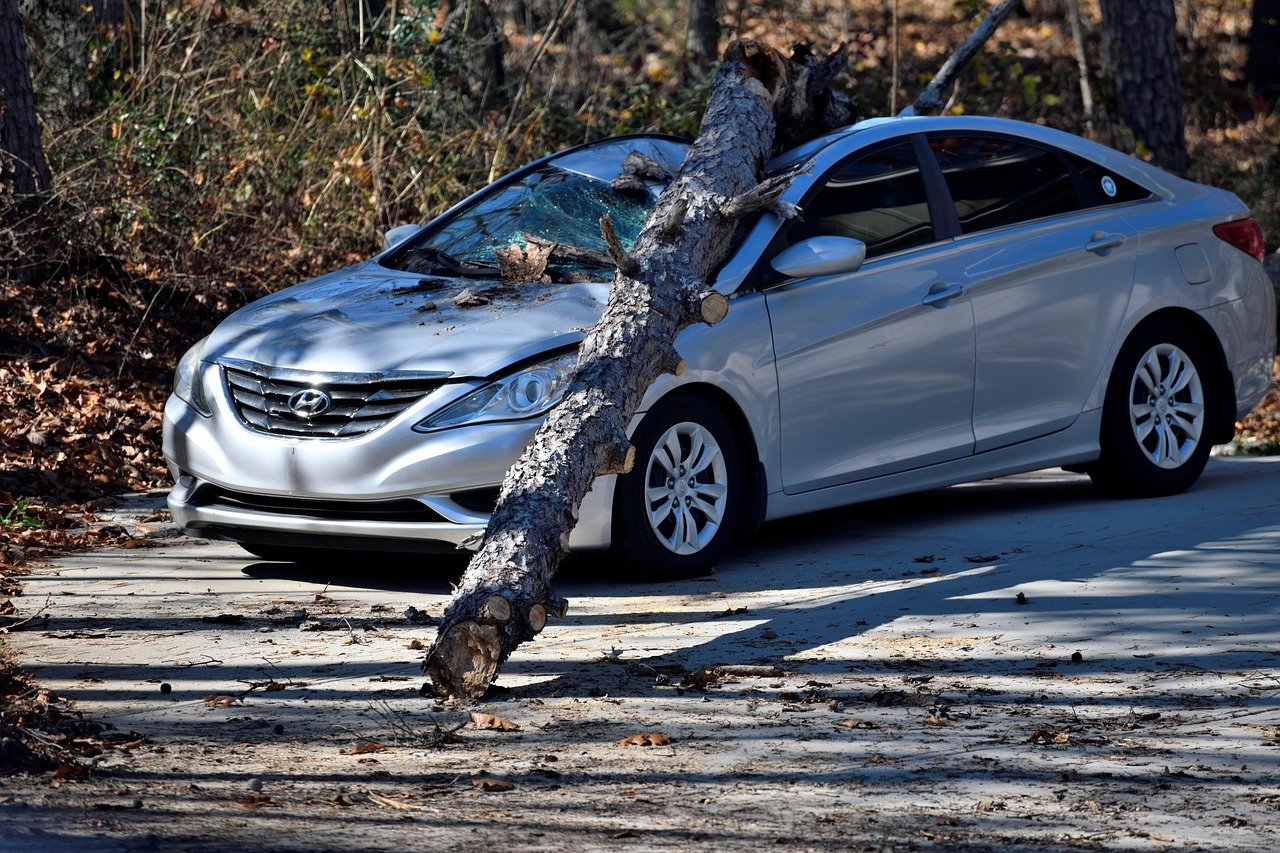
Taking your own car or a rental into the desert may seem exciting, but most rental insurance does not cover off-road desert driving. Any damage caused in sand, dunes, or rough terrain is usually your responsibility. Many first-time drivers are surprised by how quickly a car can get damaged.
Key points to know
- Rental rules: Most rental companies forbid desert driving; insurance becomes void if you ignore this.
- Common damages:
- Tires get stuck, punctured, or worn out quickly on sand.
- Suspension and shocks can break on uneven dunes.
- Underbody scrapes from hidden rocks or soft sand dips.
- Tires get stuck, punctured, or worn out quickly on sand.
- Recovery costs: Getting a stuck vehicle out can be expensive and slow.
- No coverage: Any repair bills must be paid by you, often costing more than a guided safari.
- Example: A simple sand trap can crack a rental’s underbody or puncture tires, which could cost thousands of AED.
Comparison: Self-Drive vs Guided Desert Safari
Choosing between driving yourself and joining a guided tour depends on what you value most. Self-driving offers freedom but comes with higher risks and more stress. Guided tours are safer and easier, though slightly more structured.
Key comparisons:
- Safety:
- Self-drive: High risk of getting stuck, rollovers, or fines.
- Guided: Professional drivers, backup vehicles, and safe routes.
- Cost:
- Self-drive: Often cheaper upfront, but can be expensive if the car gets damaged.
- Guided: Slightly higher price, but includes safety, insurance, and pickup.
- Experience:
- Self-drive: Freedom to choose route and pace, more adventurous.
- Guided: Relaxed experience, expert guidance, stops at the best dunes and viewpoints.
- Stress level:
- Self-drive: Navigation, parking, and desert hazards create stress.
- Guided: Minimal stress; the driver handles all risks and logistics.
- Best for:
- Self-drive: Very experienced off-road drivers only.
- Guided: Families, first-timers, and tourists wanting safe, hassle-free trips.
|
Feature / Factor |
Self-Drive Desert Safari |
Guided Desert Safari |
|
Safety |
Higher risk: getting stuck, rollovers, restricted areas |
Lower risk: professional driver, safe routes, backup support |
|
Cost |
Can seem cheaper, but damages or fines add up |
Slightly higher, includes safety, insurance, and pickup. |
|
Ease & Stress |
You handle navigation, parking, and desert hazards |
Sit back and enjoy; the driver handles all risks |
|
Experience |
Full freedom, more adventure, only for skilled drivers |
Relaxed and guided, with planned stops and viewpoints |
|
Best For |
Experienced off-road drivers are comfortable with risk |
Families, first-timers, or anyone seeking a safe, easy desert experience |
Who Should Consider Self-Drive Desert Safari
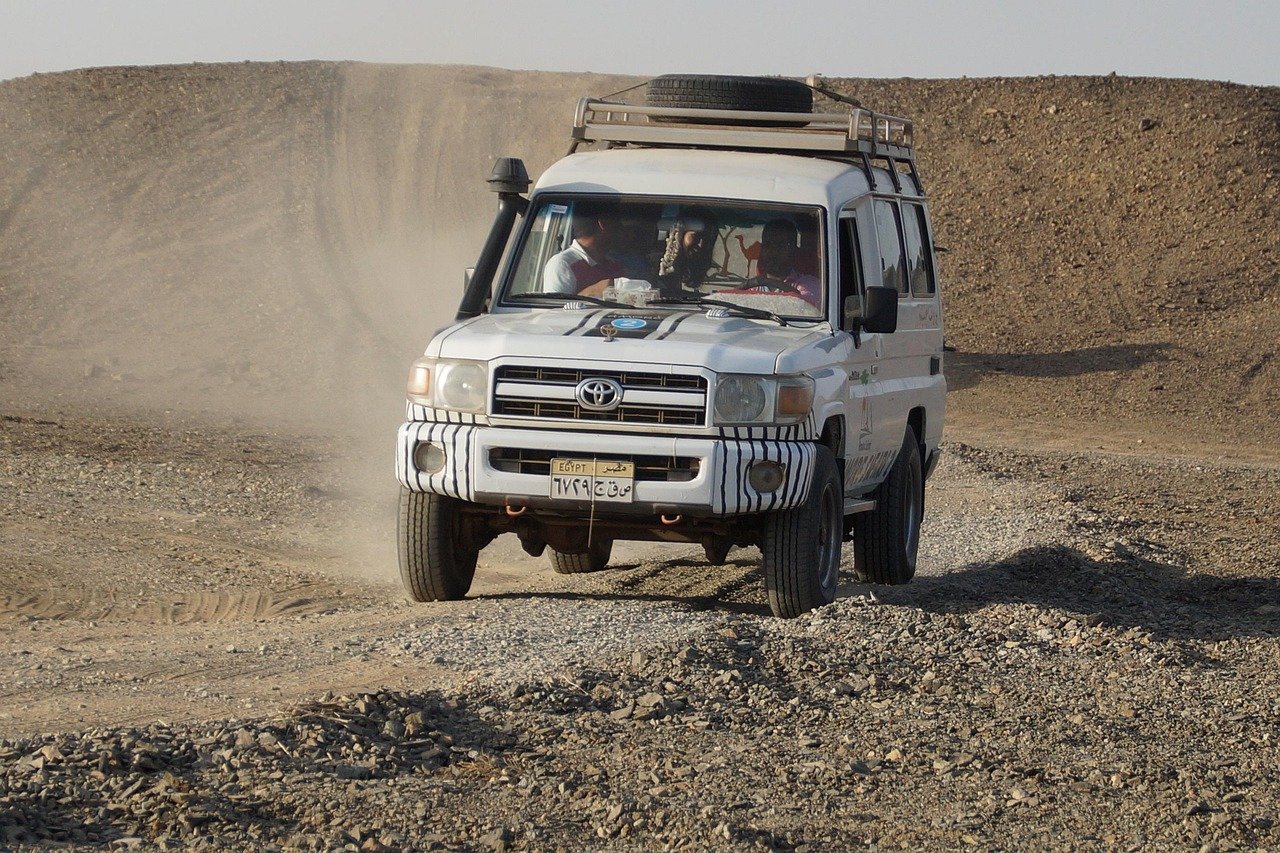
A self-drive desert safari can seem exciting, but it’s not for everyone. From years of experience guiding tourists in Dubai and Sharjah, most first-timers run into problems like getting stuck in sand, navigating restricted areas, or dealing with sudden weather changes. Only a few people are truly prepared to handle these risks safely.
Who might consider a self-drive desert safari
- Experienced off-road drivers: You know how to control a 4×4 on sand, adjust tire pressure, and handle tricky dunes.
- Frequent desert visitors or locals: You understand desert rules, access points, and common hazards.
- Well-equipped drivers: You have a proper off-road vehicle, recovery tools, and backup plans in case of emergencies.
Who should avoid self-drive safaris
- First-time tourists with little or no desert-driving experience.
- Families with children or groups looking for a safe, hassle-free experience.
- Anyone expecting a relaxed, scenic tour without the stress of navigation or risk.
Tip from local guides: Even if you’re experienced, always check desert access rules and weather conditions and have a full safety plan. For most visitors, a licensed guided 4×4 safari is safer, easier, and still delivers all the adventure without unnecessary risks.
Who Should Avoid Self-Drive Desert Safari
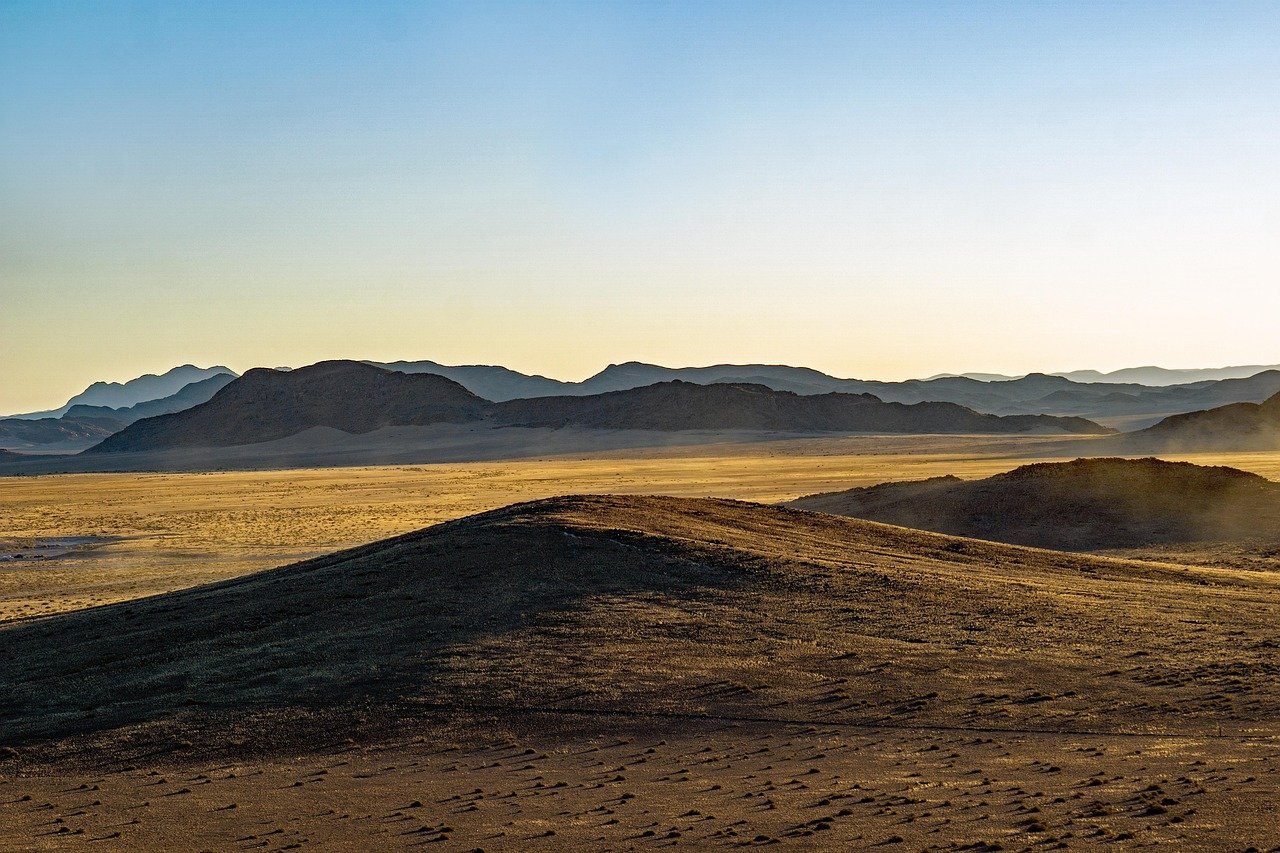
Not everyone should attempt a self-drive desert safari. From years of guiding desert tours, I’ve seen how quickly things can go wrong for people without the right experience, preparation, or local knowledge.
Driving in the desert isn’t like regular roads; soft sand, steep dunes, and changing terrain can catch even confident drivers off guard.
Who should avoid self-drive desert safaris
- Tourists new to Dubai or Sharjah: Many desert areas are restricted or have checkpoints. Without local knowledge, it’s easy to get lost or accidentally drive into a closed area
- Families with children: Keeping kids safe in soft sand, climbing dunes, and handling sudden bumps is very difficult without an experienced guide.
- First-time desert drivers: Even strong drivers can struggle with sand traction, rolling hills, and sudden slides. Mistakes can be costly or dangerous.
- Drivers without proper 4×4 skills or equipment: You need experience managing tire pressure, using recovery gear, and reading terrain. Without these, vehicles can get stuck or damaged.
- Anyone without emergency backup: In remote areas, help can take a long time to arrive if something goes wrong. Medical emergencies, vehicle breakdowns, or getting stuck can quickly turn an adventure into a serious problem.
Trusted advice: If your goal is to enjoy the desert safely and stress-free, guided 4×4 safaris are the smartest choice. You get the thrill of the dunes, expert navigation, and immediate support if anything goes wrong, so you can focus on the experience instead of worrying about risks.
Better Alternative: Guided Desert Safari
For most visitors, a guided desert safari is the safer and smarter choice. Experienced drivers know the desert like the back of their hand and can handle soft sand, steep dunes, and tricky terrain without risk. You don’t have to worry about navigation, legal access, or getting stuck.
Why guided safaris are easier and safer
- Trained drivers: Guides have years of experience driving on desert dunes and know the safest routes.
- Safety equipment included: Vehicles come with roll cages, seat harnesses, helmets, and recovery tools for emergencies.
- Support vehicles: If a buggy or 4×4 gets stuck, backup vehicles can help immediately.
- Peace of mind: You can focus on enjoying the ride, taking photos, and exploring the desert without stress about rules, parking, or vehicle damage.
- Legal access: Guided tours operate on permitted routes, so you avoid fines or accidentally entering restricted areas.
With a guided safari, you get the thrill of the desert while staying safe, supported, and stress-free. It’s the most reliable way to enjoy Dubai’s or Sharjah’s dunes, especially for first-timers, families, and tourists unfamiliar with desert driving.
Conclusion
Many tourists wonder if a self-drive desert safari in Dubai and Sharjah is really worth it. The honest answer: for most people, it’s not. Restricted desert access, soft sand, risk of getting stuck, no rescue support, and rental car insurance that doesn’t cover desert driving make it stressful and risky.
A guided desert safari with trained drivers, safety gear, and backup support lets you enjoy the desert safely. You don’t have to worry about navigation, parking, or fines.
Practical Recommendation: For a smooth, safe, and enjoyable desert experience, choose a licensed guided 4×4 safari instead of attempting self-drive. It’s easier, safer, and ensures you make the most of your adventure.
FAQs
Is a self‑drive desert safari allowed in Dubai?
Yes, you can drive your own car to a designated meeting point near the desert, but free-roaming and off‑road desert driving on dunes is not allowed without proper permissions and skills. Most unrestricted desert areas remain restricted.
Can I take a rental car to the desert?
You can drive a rental to the meeting point or parking area, but rental car insurance usually does not cover desert or off‑road driving. If you drive into sand with a rental car, you may be responsible for any damage.
Is a self‑drive desert safari safe for beginners?
No. Without desert driving experience, it’s easy to get stuck in sand, make driving mistakes, or enter restricted areas. For most beginners, guided safaris are much safer.
Do I need a special license to drive to the desert in the UAE?
You need a valid UAE or international driving license to drive to the desert meeting point. You do not need a special off‑road license if you are only driving on paved access roads.
Can I drive my own car in the dunes?
Most tour options allow you to drive to the meeting point, but professional drivers take over for dune bashing and sand driving for safety reasons. Pure self-drive across dunes is risky and often restricted.
What happens if my car gets stuck in the sand?
If your car gets stuck, you may need tow or recovery help, and rental insurance will likely not cover in‑desert damage. Guided tours include support vehicles and tools for quick help.
Can families with kids do a self‑drive desert safari?
Families can join desert safaris, but self‑driving is not recommended when kids are involved. Guided tours offer safer vehicles, trained drivers, and less stress for parents.